


Behind the Design
Behind the Desert Series: the Making of our PET Textiles
We take you behind the scenes of the production of our textiles from the Desert series, which are made from 100% recycled post-consumer plastic. Join us on the journey of turning discarded plastic into beautiful, durable and soft textiles.

A MODERNIST DESIGN
Our Desert series blends modernist design with sustainable functionality to produce designs that are perfectly adapted to indoor-outdoor living. It all started with our Desert Lounge Chair, which has since been joined by the Desert Cushion. These versatile, streamlined designs all feature textiles that have been made entirely from recycled post-consumer plastic. Additionally, we have several other textiles collections, the Way series, Hem rugs and Path Hammock among them, that are made using the same process. So how do we turn plastic waste into beautiful, durable and soft-as-wool textiles?


FROM PLASTIC TO PET YARN
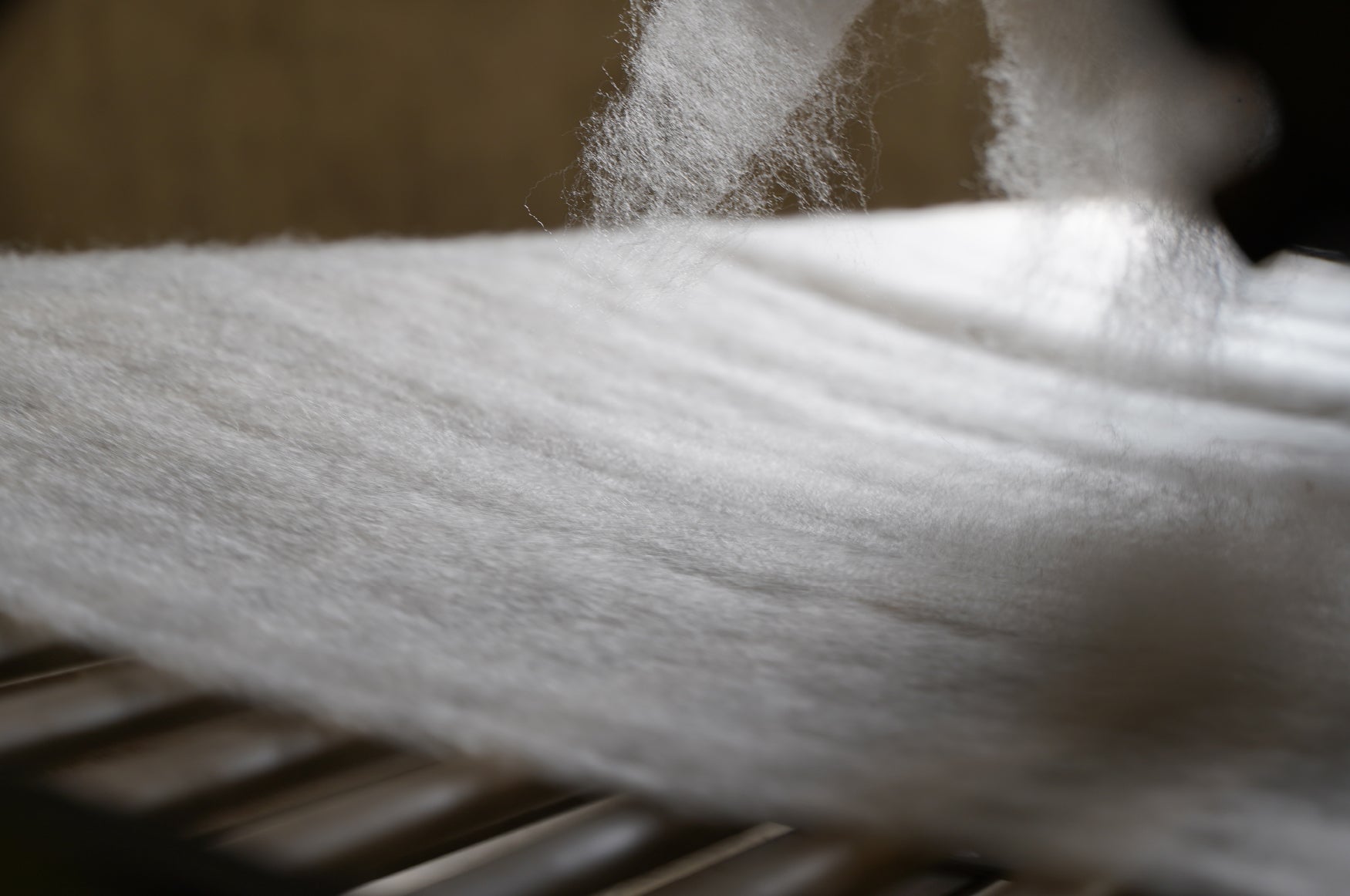
Our textile manufacturer is located in India, and so to start with, plastic waste is harvested from all over country, and is sorted and segregated to make sure that it is of pure plastic. These are then sent to a recycling factory where the waste is consolidated and crushed, compressing the plastic into solid blocks. These blocks are in turn shredded into tiny plastic chips, which are then processed to produce soft staple fibres. These slender, fluffy fibres have an almost hair-like appearance, and are now ready to be spun into yarn.
It is at this stage in the process that the raw material arrives at our manufacturing plant. Located in a city named Bhadohi in the state of Uttar Pradesh, the region has a rich history and culture for weaving, a skill which has been refined over many generations.
Find out more about our textile supplier here
Once the plastic fibres have arrived, they are converted into yarn on location. The first step is to feed the fibres into a carding machine, where they are evenly dispersed and brushed with rotating bristles. Once straightened, the individual fibres are converted into a porous mass resembling a cloth-like sheet. This soft, delicate sheet is then processed again, passing through small openings that turn the material into loose yarns. The next step is to remove these from the carding machine and twist them onto spinning mills, after which the material is spun into the desired thickness and tightness, resulting in strong, durable PET yarn that resembles a thick woollen thread. The yarn is then dyed in the chosen colours, after which it is ready to be woven into beautiful textiles.


THE RESULT: BEAUTIFUL,
DURABLE AND SOFT TO THE TOUCH
From here on, the process of weaving the textile seats, rugs and cushions is exactly the same as when working with virgin wool. The products are made by skilled craftswomen and men who work by hand using a loom, making each individual piece unique. The result is a soft, luxurious finish. It is, however, still entirely plastic, and the beneficial properties of the material remain the same, ensuring high durability and low-maintenance upkeep. The textiles do not absorb liquid and are therefore ideal for both indoor and outdoor use. In addition, recycled PET yarn can be re-recycled, meaning that if the time comes to retire the chosen textile – hopefully after years of good use – it can be recycled and repurposed once more.
At Ferm Living, we have chosen to work proactively with innovate and sustainable materials. The inclusion of these materials is an integrated part of the design phase, and with each new collection and each new product, we will continue to challenge ourselves to work with new and sustainable materials, and we will continue to add sustainable solutions and materials to our portfolio. We do it because we believe in it and feel it is part of our responsibility. We’re designing not only for today, but for the future, where sustainable action will become even more vital.

